
On This Page
- What Is Credit Utilization?
- Why Utilization Matters So Much for Your Score
- What’s the Ideal Credit Utilization Ratio?
- How to Lower Your Credit Utilization
- Does Utilization Reset Each Month?
- Utilization and Secured Cards
- Utilization’s Role in a Good Credit Score
- FAQs
Credit Utilization Ratio Explained: How It Affects Your Score
Of all the factors that make up a credit score, utilization is one of the most misunderstood — and one of the most fixable. Unlike payment history, which takes years to fully repair after a mistake, utilization can shift your score noticeably within a single billing cycle just by changing how much of your available credit you’re using at any given moment.
This guide breaks down exactly what credit utilization is, how it’s calculated, what counts as a healthy ratio, and the specific habits that bring it down quickly if it’s currently working against you. If you’re earlier in the process of establishing credit altogether, our complete guide on how to build credit from scratch covers where utilization fits into the bigger picture.

What Is Credit Utilization?
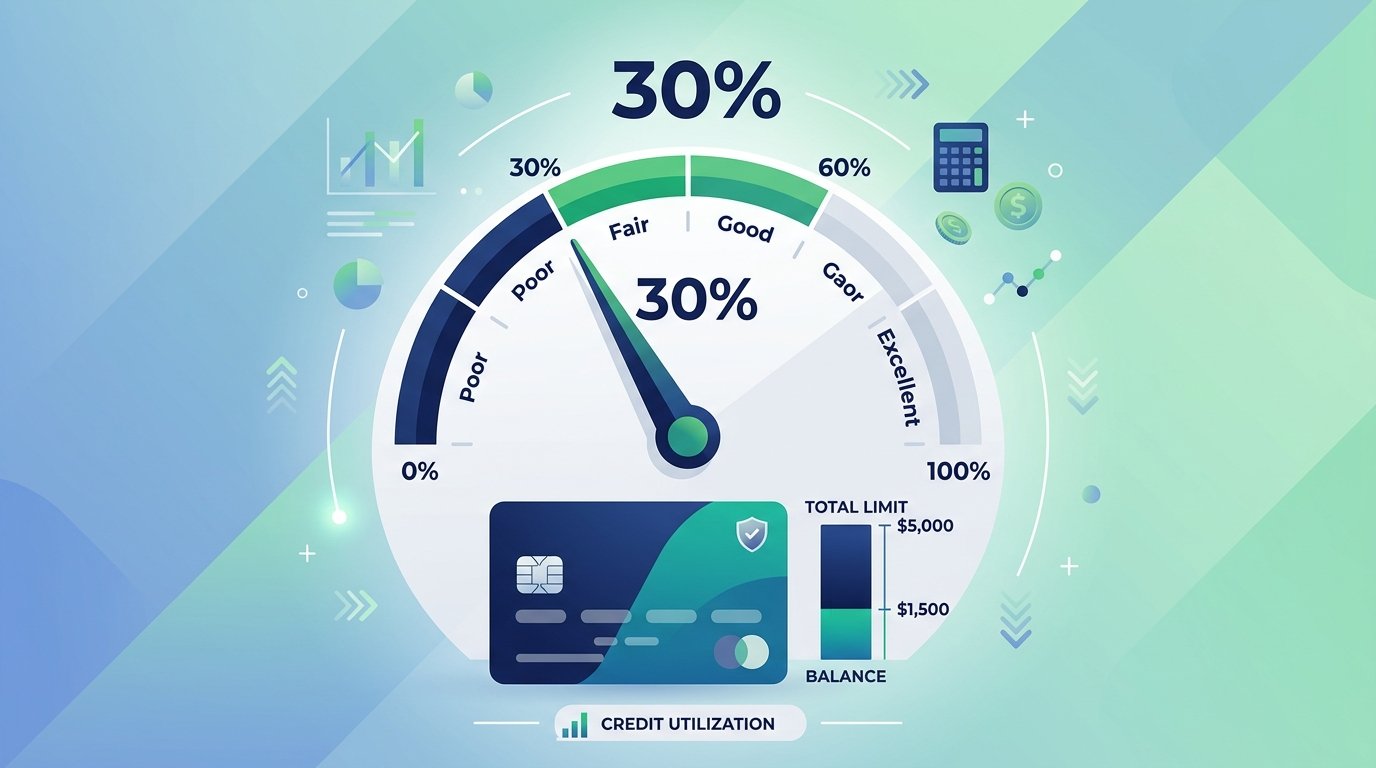
Credit utilization is the percentage of your available credit that you’re currently using. If you have a credit card with a $1,000 limit and a $250 balance, your utilization on that card is 25%.
How It’s Calculated
Utilization can be measured two ways: per-card and overall. Per-card utilization looks at the balance-to-limit ratio on a single account, while overall utilization adds up all your balances across every revolving credit account and divides by your total available credit. Most scoring models weigh both, which means a single maxed-out card can hurt your score even if your other cards sit at zero.
Why Utilization Matters So Much for Your Credit Score
Utilization is generally considered the second most influential factor in most credit scoring models, right behind payment history. The reasoning behind this weighting is fairly intuitive: someone using a small fraction of their available credit is seen as managing their finances comfortably, while someone consistently maxing out their available credit is statistically more likely to run into repayment trouble, regardless of whether they’ve actually missed a payment yet.
This is exactly why utilization can move your score noticeably from month to month — it’s treated as a real-time signal of financial pressure, not a historical record like payment history.
What’s the Ideal Credit Utilization Ratio?
While there’s no single official number that guarantees a specific score, a commonly cited guideline is keeping utilization under 30% of your available credit, with even lower utilization — often cited in the single digits to low teens — associated with the strongest scores.
Per-Card vs Overall Utilization
It’s worth optimizing both. Even if your overall utilization across all cards looks healthy, having one specific card sitting near its limit can still drag down your score, since scoring models evaluate individual account utilization as well as the aggregate. Spreading balances more evenly, or paying down your highest-utilization card first, tends to produce faster improvement than focusing only on your overall percentage.

How to Lower Your Credit Utilization
Pay Down Balances Before the Statement Date
Many people assume utilization is based on your balance at the end of the billing cycle after you’ve made a payment, but issuers typically report your balance as of the statement closing date — often before your payment is even due. Paying down your balance a few days before the statement closes, rather than waiting until the due date, can meaningfully lower the utilization that actually gets reported.
Request a Credit Limit Increase
Since utilization is a ratio, increasing your available credit while keeping your spending the same automatically lowers your utilization percentage. Many issuers allow you to request a limit increase periodically, sometimes without a hard inquiry, making this one of the easier levers to pull if your spending habits are already solid.
Spread Spending Across Multiple Cards
If you have access to more than one card, spreading purchases across them rather than concentrating everything on a single card keeps each individual account’s utilization lower, which helps both your per-card and overall ratios.

Does Utilization Reset Each Month?
Yes, in the sense that it’s recalculated every billing cycle based on your balance at the time your statement closes. Unlike payment history, which accumulates and ages over years, utilization is a snapshot — meaning a high balance one month and a low balance the next can cause your score to fluctuate accordingly, without any lasting negative mark attached to the temporary spike.
This is actually good news for anyone trying to improve their score quickly: unlike recovering from a missed payment, which takes time to fade, bringing utilization down can show up in your score relatively fast once the lower balance is reported.
Utilization and Secured Cards
Because secured card limits are often smaller than typical unsecured limits, utilization can climb quickly even with modest spending. A single purchase that would barely register on a card with a $5,000 limit can push a $300 secured card well past recommended utilization levels. If you’re using a secured card as your primary credit-building tool, our guide on best secured credit cards for building credit covers how to manage this trade-off, including choosing a card with a deposit size that gives you enough breathing room.
Utilization’s Role in a Good Credit Score
Utilization doesn’t exist in isolation — it’s one of several factors, alongside payment history, credit age, and credit mix, that combine to produce your overall score. Understanding exactly how it’s weighted relative to these other factors makes it easier to prioritize your efforts where they’ll have the biggest impact. Our full breakdown in what is a good credit score and why it matters covers how all these pieces fit together and what score ranges you can realistically aim for.
FAQs
Does paying off my card in full every month mean my utilization is always 0%? Not necessarily. If your issuer reports your balance on the statement closing date and you haven’t paid it down before then, your reported utilization could still show a balance even if you pay it off in full before the due date.
Is 0% utilization the best possible score for this factor? Not always. Some scoring models actually favor a very small amount of reported utilization — generally in the low single digits — over exactly 0%, since it shows the card is actively being used responsibly rather than sitting dormant.
How quickly does lowering utilization improve my score? Often within one billing cycle, since utilization is recalculated each time your balance is reported, unlike payment history which takes longer to shift.
Does requesting a credit limit increase hurt my score? It depends on the issuer. Some perform a soft inquiry with no impact, while others may require a hard inquiry, causing a small temporary dip. It’s worth checking with your issuer beforehand.
Should I close old cards to simplify my finances if I’m not using them? Generally no. Closing a card reduces your total available credit, which can raise your overall utilization percentage even if your spending hasn’t changed, and it can also shorten your average account age.
Conclusion
Credit utilization ratio, once you understand how it’s actually calculated and reported, becomes one of the most controllable levers you have for improving your score — often showing results faster than any other factor. Keep your balances well under your limits, consider timing payments before your statement closes, and don’t be afraid to request a limit increase if your spending habits are already solid.
Combined with consistent on-time payments and a healthy credit mix, managing utilization deliberately is one of the fastest ways to move your score in the right direction month over month.
This article is for informational purposes only and does not constitute financial advice. Consult a qualified financial advisor for guidance specific to your situation.
Author: Personal Finance Editorial Team — covering practical credit-building and banking guidance for readers starting from any financial background.