
On This Page
- What’s the Difference Between Checking and Savings Accounts?
- Which Should You Open First?
- Do You Actually Need Both?
- Fees and Requirements to Watch For
- How This Connects to Building Credit
- Choosing Where to Open Your Accounts
- Automating Your Savings
- FAQs
Checking vs Savings Account: Which Do You Need First?
If you’re setting up your finances for the first time, one of the earliest questions you’ll run into is whether to open a checking account, a savings account, or both right away. It seems like a small decision, but getting the order right actually matters — the wrong sequence can mean unnecessary fees, missed interest, or friction when you try to build credit down the line.
This guide breaks down exactly what each account type is built for, how to decide which to open first based on your situation, and what to watch out for either way. If you’re working through your full financial foundation from scratch, our complete guide on how to build credit from scratch shows where this decision fits into the bigger picture.

What’s the Difference Between Checking and Savings Accounts?
Both are basic deposit accounts offered by banks and credit unions, but they’re built for different purposes.
Checking Accounts — What They’re For
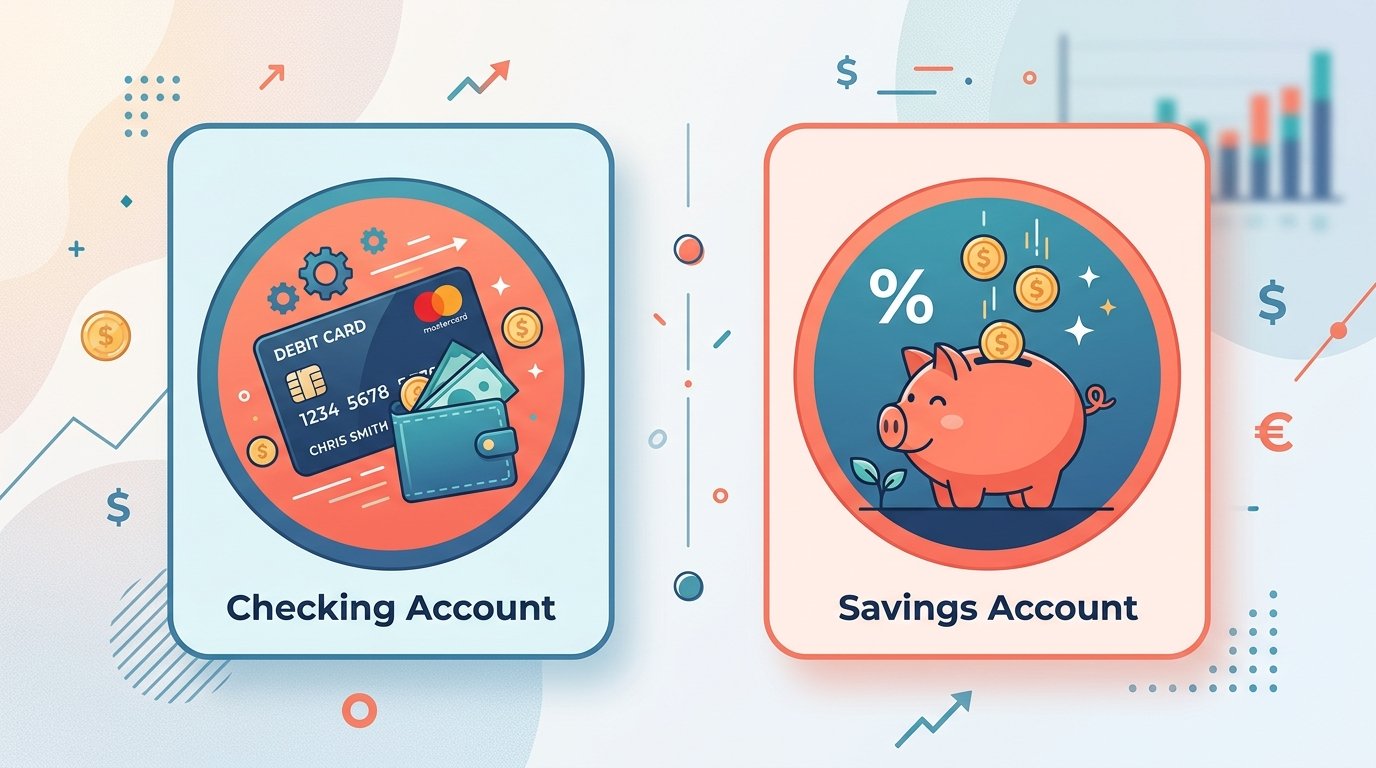
A checking account is designed for frequent, everyday transactions — paying bills, making debit card purchases, and receiving your paycheck through direct deposit. Most checking accounts come with a debit card and unlimited transactions, but they typically earn little to no interest on your balance.
Savings Accounts — What They’re For
A savings account is designed to hold money you’re not spending immediately, and it typically earns interest — sometimes meaningfully more than a checking account, particularly with online banks. Savings accounts often have limits on the number of withdrawals you can make per month, which is intentional; the structure nudges the account toward its purpose as a place to store money rather than spend it.
Which Should You Open First?
If You’re Starting From Zero
If you don’t have any income coming in yet, or you’re just getting your first job, a checking account is usually the more urgent priority, since it’s what you’ll need for direct deposit and everyday spending. A savings account can follow shortly after, once you have some income flowing through the checking account to set aside.
If You Already Have Income Coming In
If you already have a paycheck or steady income but no formal banking setup at all, opening both at once — often available as a linked pair from the same bank — is usually the more efficient path. Many banks let you open a checking and savings account together in a single application, avoiding the need to go through the process twice.

Do You Actually Need Both?
For almost everyone, yes — eventually. A checking account without a savings account leaves you with nowhere separate to build an emergency buffer, which tends to result in extra spending simply because the money is sitting in the same place you draw from daily. A savings account without a checking account is workable in the short term but becomes inconvenient quickly, since most savings accounts aren’t designed for frequent transactions or debit card use.
The real question usually isn’t “checking or savings” long-term — it’s which one to prioritize opening first based on your immediate situation, with the expectation that you’ll have both within a short window of time either way.
Fees and Requirements to Watch For
Both account types can carry fees depending on the bank, so it’s worth checking a few things before opening either:
- Monthly maintenance fees — many banks waive these if you maintain a minimum balance or set up direct deposit, but not all accounts offer a waiver at all.
- Minimum opening deposit — some accounts require a minimum amount just to open, which can be a barrier if you’re starting with very little.
- Excessive withdrawal fees — some savings accounts still charge for exceeding a certain number of withdrawals per month, even though federal rules that used to strictly limit this have loosened in recent years.
- Overdraft fees — checking accounts in particular can carry steep overdraft charges if you spend more than your balance; look for accounts with overdraft protection or no-fee overdraft policies.
How This Choice Connects to Building Credit
Neither a checking nor a savings account directly builds your credit score on its own, since they’re deposit accounts rather than credit accounts. But they play a supporting role that matters more than people expect: a checking account is typically required to make payments on any credit card or loan you open, and a savings account gives you a buffer that helps you avoid missed payments during a tight month — one of the most damaging things that can happen to a credit score in progress. For the full picture of how this fits together, see our complete guide on how to build credit from scratch.
Choosing Where to Open Your Accounts
Once you’ve decided which account to prioritize, the next question is which bank to actually use. Online banks and traditional banks offer meaningfully different trade-offs in terms of interest rates, fees, and in-person access, and the right choice often depends on the same situation that determined your checking-vs-savings decision in the first place. Our full breakdown in how to choose a bank in 2026 walks through exactly how to compare your options.
Automating Your Savings Once You Have Both
Once you have a checking and savings account set up, the next natural step is making sure money actually moves into savings consistently, rather than relying on remembering to transfer it manually. Our step-by-step guide on how to automate your savings walks through exactly how to set this up so your savings habit runs in the background without ongoing effort.
FAQs
Can I use a savings account like a checking account? Not effectively. Most savings accounts don’t come with a debit card or check-writing ability, and some still limit the number of withdrawals per month, making them impractical for everyday spending.
Do I need good credit to open a checking or savings account? Generally no. Most banks don’t check your credit score to open a basic checking or savings account, though they may check a separate banking history report to screen for past account mismanagement.
Will opening a checking and savings account together cause two hard inquiries? No. Opening deposit accounts typically doesn’t involve a credit check at all, so there’s no impact on your credit score either way.
What if I can’t meet the minimum balance requirement to avoid fees? Look specifically for accounts marketed as no-fee or fee-free, which are increasingly common, particularly among online banks that have lower overhead than traditional branch-based banks.
Should I open both accounts at the same bank? It’s often more convenient, since transfers between linked accounts at the same institution are typically instant and fee-free, but it’s not required — some people intentionally use different banks for checking and savings to take advantage of better interest rates elsewhere.
Conclusion
Deciding between checking vs savings account often comes down to your immediate situation rather than a universal rule: if you need somewhere for your paycheck to land and bills to get paid, start with checking; if you already have income flowing and just need somewhere to build a buffer, savings might come first. Either way, most people end up needing both fairly quickly, so it’s worth treating this as a “which first” question rather than an “either/or” decision.
Once both accounts are in place, the next steps — choosing the right bank and automating your savings — build directly on this foundation.
This article is for informational purposes only and does not constitute financial advice. Consult a qualified financial advisor for guidance specific to your situation.
Author: Personal Finance Editorial Team — covering practical credit-building and banking guidance for readers starting from any financial background.