

Holding crypto and letting it sit idle is, in a lot of ways, leaving money on the table. Decentralized finance made it possible to put your assets to work — staking them, lending them out, or providing liquidity — in exchange for rewards that can meaningfully outpace what you’d earn just holding. But none of that works well if your wallet isn’t actually built for it.
Not every wallet handles DeFi rewards equally well. Some make staking a one-tap process; others require jumping through three different apps just to connect to a protocol. This guide breaks down what earning DeFi rewards actually involves, what to look for in a wallet built for it, and how to get started without exposing yourself to unnecessary risk.
If you haven’t yet decided between a hardware or software wallet in general, our complete crypto wallet comparison guide is a good starting point before diving into DeFi specifics.

What Are DeFi Rewards and How Do They Work?
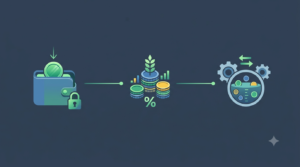
DeFi rewards are the returns you earn by putting your crypto to work inside decentralized protocols instead of leaving it idle in a wallet. Instead of a bank paying you interest on a savings account, a smart contract pays you rewards for locking up, lending, or supplying your assets to a protocol.
The mechanics differ depending on the method, but the basic idea is consistent: you’re providing something the network needs — security, liquidity, or capital — and getting compensated for it.
Staking vs Yield Farming vs Liquidity Pools
These three terms get used interchangeably sometimes, but they work differently:
- Staking involves locking up a proof-of-stake coin to help secure the network. In return, you earn a percentage yield, often paid in the same asset you staked. This is generally considered the lowest-risk DeFi reward method.
- Yield farming means moving your assets across different protocols to chase the best available returns, often involving more complex strategies and higher risk in exchange for potentially higher rewards.
- Liquidity pools involve depositing a pair of assets into a decentralized exchange so others can trade against that pool. You earn a share of trading fees, but you’re exposed to a risk called impermanent loss, which we’ll cover further down.
What Makes a Wallet Good for Earning DeFi Rewards
Before picking a specific wallet, it helps to know which features actually matter for this use case specifically — as opposed to general crypto storage.
Built-in dApp Browser
A dApp browser lets you connect directly to DeFi protocols from inside your wallet app, without needing a separate browser extension. This matters more than it sounds — wallets without this feature often require clunky workarounds like WalletConnect QR codes for every single interaction, which adds friction and, in some cases, additional risk if you’re not careful about which sites you’re connecting to.
Multi-Chain Support
DeFi isn’t concentrated on a single blockchain anymore. Some of the best yields show up on newer chains and Layer 2 networks, not just Ethereum mainnet. A wallet that only supports one or two chains will lock you out of a large chunk of available opportunities. If you’re planning to move between ecosystems, this is worth checking closely — our guide on wallets for decentralized finance goes deeper into chain compatibility specifically.
Gas Fee Optimization
Every DeFi transaction costs gas, and fees can vary significantly between wallets depending on how they estimate and route transactions. A wallet that consistently overestimates gas fees, or doesn’t let you adjust them, can quietly eat into your rewards over time — especially if you’re making frequent smaller transactions like compounding staking rewards.
Top Crypto Wallets for DeFi Rewards in 2026
Rather than ranking by brand hype, here’s how to think about the categories of wallets that tend to perform best for this specific purpose.
Wallet Category 1 – Best Overall for DeFi Rewards
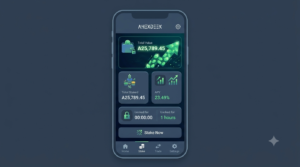
Look for a non-custodial mobile wallet with a built-in dApp browser, native staking support for major proof-of-stake assets, and clear reward tracking inside the app itself. The best all-around option for most users is one that lets you stake directly from the home screen without routing through a third-party site.
Wallet Category 2 – Best for Ethereum-Based DeFi
If most of your activity is on Ethereum and its Layer 2 networks, prioritize a browser extension wallet with strong WalletConnect integration and support for the major lending and liquidity protocols. These wallets tend to have the deepest DeFi ecosystem support simply because Ethereum-based DeFi has the longest track record.
Wallet Category 3 – Best for Multi-Chain Yield Farming
For users chasing yield across several chains at once, a wallet with native multi-chain switching (without needing to manually add each network) saves a significant amount of time and reduces the chance of sending assets to the wrong network by mistake.
Risks of Earning DeFi Rewards (Impermanent Loss, Smart Contract Risk)
Rewards in DeFi aren’t free money, and it’s worth being clear-eyed about the risks before committing significant funds.
Impermanent loss happens when you provide liquidity to a pool and the price ratio between the two assets shifts. Even though you’re earning fees, you can end up with less total value than if you’d simply held the assets separately. This risk is highest in pools with volatile, unrelated asset pairs and lowest in pools of similarly priced stable assets.
Smart contract risk refers to the possibility that the code running a protocol has a bug or vulnerability that can be exploited. Even well-audited protocols have had exploits in the past. This is why spreading funds across a few well-established protocols is generally safer than concentrating everything in one newer, unaudited platform offering unusually high returns.
Rug pulls and scam protocols remain a real threat, especially with newer, unaudited projects promising unrealistic yields. If a protocol is offering returns that seem far higher than comparable options, that’s a signal to research more carefully before depositing funds — not a reason to move faster.
How to Start Earning DeFi Rewards Safely — Step by Step
- Choose a non-custodial wallet with dApp browser support and multi-chain compatibility, based on the categories above.
- Secure your recovery phrase offline before depositing any meaningful funds — this step matters more here than in basic wallet use, since DeFi interactions increase your exposure to phishing attempts.
- Start with a well-established protocol rather than the newest, highest-yield option you can find. Established platforms with a longer track record and independent audits are generally safer starting points.
- Start small. Test the process — connecting your wallet, depositing funds, tracking rewards, and withdrawing — with a small amount before committing larger sums.
- Diversify across a few protocols rather than putting everything into one, to reduce your exposure to any single smart contract failure.
- Track your rewards and re-evaluate periodically. Yields shift over time as more capital enters a pool or protocol, so what’s a good rate today may not be in a few months.
DeFi Wallets vs Standard Crypto Wallets
It’s worth being clear that not every crypto wallet is a “DeFi wallet” in any meaningful sense. A standard wallet built primarily for sending, receiving, and holding assets might technically be able to connect to a DeFi protocol, but it often lacks the dApp browser, gas optimization, and multi-chain switching that make the experience smooth and safe.
If you’re specifically choosing a wallet with decentralized finance as the primary use case — rather than an occasional side activity — our dedicated guide on best crypto wallets for decentralized finance covers the full feature checklist in more depth. And if you haven’t settled on hardware vs. software storage for the bulk of your holdings yet, that decision affects your DeFi setup too — see our breakdown in hardware vs software wallets.
FAQs
Do I need a special wallet to earn DeFi rewards, or can I use any wallet? You technically can use most non-custodial wallets, but wallets without a built-in dApp browser or multi-chain support will make the process significantly more cumbersome and, in some cases, riskier due to extra steps involving external connections.
Is staking safer than yield farming? Generally yes. Staking usually involves a single, well-understood protocol (the blockchain itself) with a longer track record, while yield farming often involves newer, more complex protocols with additional smart contract risk layered on top.
Can I lose money earning DeFi rewards? Yes. Impermanent loss, smart contract exploits, and token price volatility can all result in a net loss even while you’re technically earning “rewards.” It’s not a guaranteed return in the way traditional interest often is.
How often are DeFi rewards paid out? This varies by protocol. Some pay out continuously in real time (visible as your balance ticking upward), while others distribute rewards at set intervals, such as daily or weekly.
What’s a realistic yield to expect from DeFi in 2026? Yields vary significantly by asset and protocol, and they shift over time based on market conditions and available capital. Rather than chasing a specific number, it’s more useful to compare current rates across a few established platforms before committing funds.
Conclusion
Earning DeFi rewards can meaningfully improve what your crypto holdings do for you over time, but it starts with choosing a wallet actually built for the job — one with a solid dApp browser, multi-chain support, and sensible gas fee handling. From there, the biggest factor in your success isn’t finding the single highest yield available; it’s managing risk sensibly, starting small, and spreading funds across a few trusted protocols rather than chasing the newest, flashiest option.
Take the time to get your wallet setup right before you start earning — it’s a lot easier to build good habits from day one than to fix a risky setup after something’s already gone wrong.
This article is for informational purposes only and does not constitute financial advice. DeFi investments carry risk, including potential loss of principal. Always do your own research before participating in any protocol.
Author: Crypto & Finance Editorial Team — researching and reviewing crypto tools since the early days of DeFi, with a focus on practical, jargon-free guidance for everyday users.