

Decentralized finance runs on smart contracts, not banks — which means your wallet isn’t just a place to store crypto, it’s your login, your signature, and your gateway into every protocol you interact with. If you’ve spent any time trying to connect a wallet to a lending platform or decentralized exchange only to hit a compatibility issue or a confusing connection prompt, you already know that not every wallet handles this well.
This guide covers what actually makes a wallet “DeFi-ready,” what to check before connecting to any platform, and how to avoid the mistakes that trip up a lot of people the first time they interact with decentralized protocols. If you’re still deciding on a wallet in general terms first, our complete crypto wallet comparison guide is a good place to start.

What Is DeFi and Why You Need a Compatible Wallet
Decentralized finance refers to financial services — lending, borrowing, trading, and earning yield — built on blockchain networks instead of traditional financial institutions. There’s no bank approving your loan or exchange holding your funds on your behalf; instead, smart contracts handle everything automatically based on code that anyone can inspect.
Because there’s no central company managing your account, your wallet becomes the only way to prove who you are and authorize what happens to your funds. A wallet that isn’t built to interact cleanly with dApps (decentralized applications) turns every interaction into a workaround, and workarounds are exactly where mistakes and security issues tend to creep in.
Must-Have Features in a DeFi Wallet
Not every wallet marketed as “DeFi-compatible” actually delivers a smooth experience. These are the features worth checking for specifically.
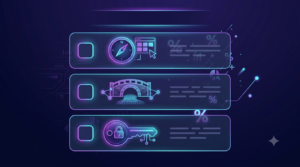
WalletConnect / dApp Browser Support
WalletConnect is the protocol that lets your wallet securely connect to a decentralized app, usually via a QR code or direct in-app browser. A wallet with a built-in dApp browser skips the extra step entirely, letting you browse and connect to protocols from inside the wallet app itself. This matters for both convenience and safety — fewer steps means fewer opportunities to end up on a spoofed connection screen.
Cross-Chain Bridges
Many DeFi opportunities live on different chains, and moving assets between them requires a bridge. Some wallets have bridging built in directly; others require you to use a separate third-party bridge site, which adds an extra layer of risk since bridge hacks have historically been one of the more common attack vectors in crypto. A wallet with native, audited bridging support reduces that exposure.
Self-Custody & Private Key Control
This one is close to non-negotiable for serious DeFi use. Custodial wallets — where a company holds your keys — generally don’t support direct dApp interaction at all, or they support it in a limited, walled-off way. Non-custodial wallets, where you hold your own keys, are what actually let you sign transactions and interact with smart contracts directly.
Best DeFi Wallets in 2026 (Reviewed)
Rather than ranking specific brand names that change and update constantly, here’s how the strongest options in each category tend to perform.
Category 1 – Best for Everyday DeFi Users
A mobile wallet with a built-in dApp browser, support for major EVM chains, and a simple approval interface that clearly shows what permissions you’re granting before you confirm a transaction. This category is the best starting point for most people getting into DeFi for the first time.
Category 2 – Best for Power Users and Frequent Traders
A browser extension wallet with deep integration across decentralized exchanges, lending platforms, and Layer 2 networks. These wallets typically offer more granular control over gas fees and transaction settings, which matters more once you’re making several DeFi transactions a week rather than occasionally.
Category 3 – Best for Multi-Chain DeFi Strategies
A wallet built specifically around seamless chain-switching, letting you move between ecosystems without manually adding network details each time. This is the right category if your DeFi activity spans several chains rather than concentrating on just one or two. For a deeper look at pairing this with yield strategies specifically, see our guide on wallets for earning DeFi rewards.
DeFi Wallets vs Centralized Exchange Wallets
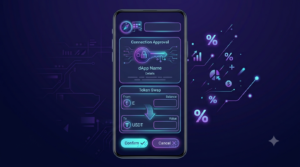
It’s worth being direct about this distinction, because a lot of beginners assume their exchange account functions the same way a DeFi wallet does. It doesn’t.
A centralized exchange wallet is custodial — the exchange holds your private keys, and your balance is really just an entry in their internal database until you withdraw. This setup is fine for trading and holding, but it generally can’t connect to external DeFi protocols at all, since there’s no wallet address you personally control signing transactions.
A DeFi wallet, by contrast, gives you a real, self-custodied address on the blockchain that any protocol can interact with directly. If your goal is anything beyond buying and holding — lending, staking outside of an exchange’s own product, or providing liquidity — you’ll need to withdraw funds from the exchange into a non-custodial wallet first.
How to Connect Your Wallet to a DeFi Platform (Step-by-Step)
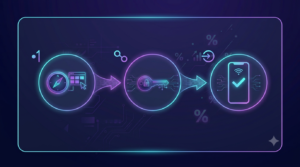
- Open the DeFi platform’s website and locate the “Connect Wallet” button, usually in the top corner.
- Select your wallet type from the list presented — this triggers either a browser extension popup or a WalletConnect QR code for mobile wallets.
- Review the connection request carefully. Confirm you’re on the correct, official URL before approving anything — fake sites mimicking real protocols are a common scam vector.
- Approve the connection in your wallet. This alone typically doesn’t grant transaction permissions — it just links your address to the site.
- Review any transaction or approval requests individually. Before confirming a swap, deposit, or approval, check exactly what the transaction allows the protocol to do, especially for “unlimited approval” requests, which some protocols default to.
- Disconnect when finished, if the platform offers that option, rather than leaving an active connection indefinitely.
Security Tips for DeFi Wallet Users
- Bookmark official sites instead of searching for them each time, to avoid landing on phishing clones through sponsored search results.
- Revoke old permissions periodically. Many wallets and third-party tools let you review and revoke smart contract approvals you no longer need, which reduces your exposure if a protocol is later compromised.
- Never share your recovery phrase, no matter how legitimate a support request looks. No real wallet provider or protocol will ever ask for it.
- Use a hardware wallet for larger balances, connecting it to your software wallet as a signing device for DeFi transactions. This combines convenience with stronger security — see our full comparison in hardware vs software wallets.
- Double-check contract addresses before approving unfamiliar tokens, since scam tokens sometimes use names nearly identical to legitimate ones.
Related: Best Wallets for Earning DeFi Rewards
If your interest in DeFi is specifically about generating passive income rather than active trading or borrowing, our companion guide on the best crypto wallets for earning DeFi rewards goes deeper into staking, yield farming, and liquidity pool strategies, along with the specific risks involved in each.
FAQs
Can I use a centralized exchange wallet for DeFi? Generally no. Exchange wallets are custodial, meaning the exchange holds your keys, and most DeFi protocols require a self-custodied wallet address to interact directly with smart contracts.
Is it safe to connect my wallet to a new DeFi platform? Connecting alone is relatively low risk since it typically doesn’t grant transaction permissions. The real risk comes from approving specific transactions, especially unlimited token approvals, so review each request carefully before confirming.
What happens if I approve unlimited token spending by mistake? The protocol will have permission to move that token from your wallet up to the approved limit. You can revoke this permission afterward using a wallet permissions manager, but it’s safer to avoid granting unlimited approvals in the first place when a platform offers a limited option instead.
Do I need a different wallet for every blockchain I use in DeFi? Not necessarily. Most modern DeFi wallets support multiple EVM-compatible chains within a single wallet. Non-EVM chains may still require a separate wallet or extension, depending on the ecosystem.
Is a hardware wallet compatible with DeFi platforms? Yes, most hardware wallets can connect to DeFi platforms through a companion software wallet, letting you get hardware-level security while still interacting with smart contracts.
Conclusion
A wallet built for decentralized finance needs to do more than just hold your assets — it needs to connect cleanly and securely to the protocols you’re actually using. Prioritize dApp browser support, solid cross-chain compatibility, and full self-custody, and take the extra few seconds each time to review what you’re approving before confirming a transaction. The wallets that make DeFi easiest are the ones that make these checks feel natural rather than like extra friction.
This article is for informational purposes only and does not constitute financial advice. DeFi involves risk, including smart contract vulnerabilities and potential loss of funds. Always verify platforms independently before connecting a wallet.
Author: Crypto & Finance Editorial Team — researching and reviewing crypto tools since the early days of DeFi, with a focus on practical, jargon-free guidance for everyday users.